
 Gulf News
Gulf Job Crisis 2026: Why Thousands of Indians are Waiting Outside Visa Centers
📌 Show Quick Read
Summary is AI-generated, Videsh Chalo-reviewed
-
Hiring Slowdown: Regional conflict involving Israel and Iran is delaying recruitment for nearly 300,000 Indian workers headed to the Gulf.
-
High Demand: Despite the war, thousands continue to apply for visas in Delhi and Mumbai.
-
Economic Impact: Gulf remittances account for 40% of India's total overseas inflows, contributing nearly 4% to the national GDP.
-
Professional Shift: Beyond labor, there is a surge in IT and engineering professionals seeking better opportunities in the Middle East.
Middle Eastern Tensions Slow Down Indian Labor Recruitment for Gulf Countries
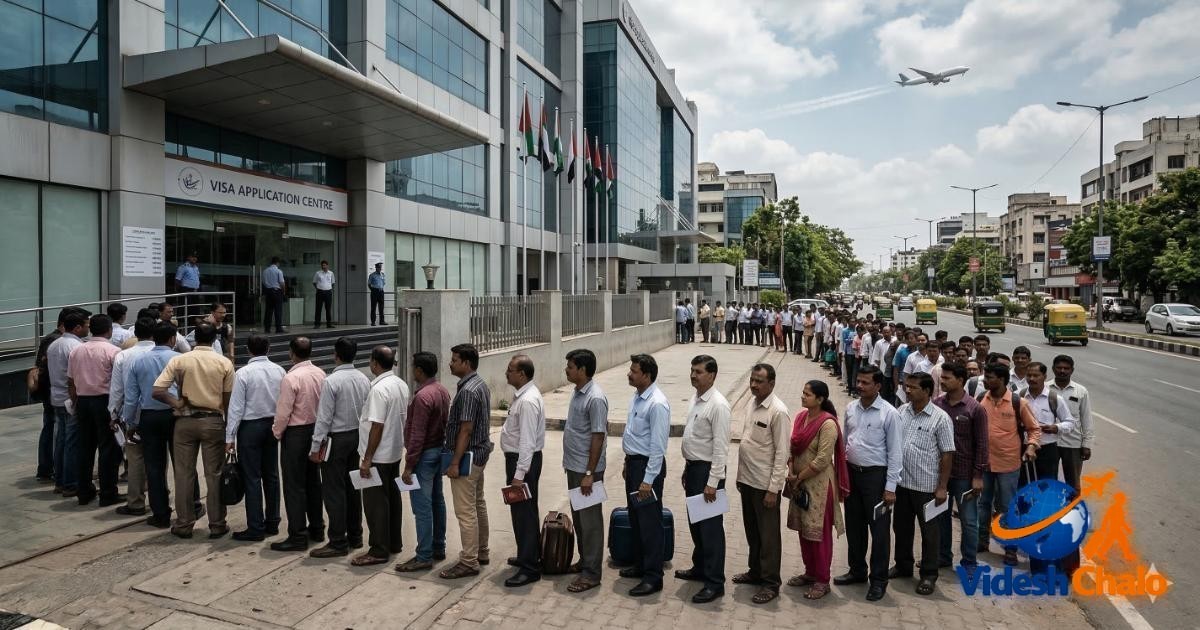
The escalating geopolitical tensions involving the US, Israel, and Iran have started to cast a long shadow over the recruitment of Indian laborers for jobs in the Gulf region. While the demand for skilled and unskilled labor in the Middle East remains fundamentally strong, the logistical and security concerns arising from the ongoing conflict are causing significant delays. Despite these challenges, thousands of Indian aspirants continue to queue up outside visa application centers in major cities like Delhi and Mumbai, hoping for a chance to secure their future abroad.
Current Situation at Visa Centers in Delhi and Mumbai
In the heart of India's capital, Delhi, the pavements outside visa processing offices are crowded with hopeful candidates. Many of these workers come from rural backgrounds in Bihar, Uttar Pradesh, and Rajasthan. Despite the news of regional instability, scores of men stood waiting with their documents on Tuesday. For many of these workers, a job in the Gulf is not just a career move; it is a lifeline for their families back home.
Gulf Job Alert: What Indian Expats Need to Know About the Current UAE Situation
One such individual, Dilip Yadav, shared his story. Having worked as a fitter in Dubai for a decade, he is now assisting his younger brother in navigating the visa process. Dilip mentioned that without the income generated from the Middle East, his family in Bihar would struggle to survive. His brother previously worked in South Africa, but the higher wages in Dubai make it a far more attractive destination, despite the current regional tensions.
Impact on Recruitment Numbers: 3 Lakh Jobs at Stake
The scale of migration from India to the Middle East is massive. According to industry experts and recruitment agents in Mumbai, approximately 100,000 to 150,000 Indians migrate to the Gulf every single month. However, the current war situation has forced many to hit the pause button. Amit Saxena, Director of Ambe International, recently noted that if the situation persists, more than 300,000 recruitments from India could be negatively affected in the coming months.
Key sectors affected include:
- Refinery and Petroleum
- Construction and Infrastructure
- IT and Telecommunications
- Healthcare and Engineering
The Economic Importance of the Gulf for India
The significance of these jobs cannot be overstated. Non-Resident Indians (NRIs) in the Gulf region are the primary contributors to India's foreign exchange. In 2024, remittances from overseas Indians reached nearly $130 billion, with the Gulf Cooperation Council (GCC) countries accounting for almost 40 percent of that total. The Reserve Bank of India (RBI) has previously highlighted that these remittances contribute nearly 4 percent to India's total GDP, making the stability of the Gulf job market a matter of national economic importance.
Why Demand Remains High Despite the Conflict
Even with the threat of war, the demand from Gulf nations for Indian talent has not vanished. The recruitment process typically takes about three months from initial interview to departure. Major projects in the oil and gas sectors continue to require a steady stream of manpower. This is why recruiters are still seeing high engagement from candidates in Kerala, Maharashtra, and other southern states.
Furthermore, the profile of the Indian migrant is changing. While blue-collar workers still form the majority, there is a rising trend of professionals from the IT and engineering sectors seeking opportunities in the Middle East. These high-skilled workers are drawn by tax-free salaries and the modern infrastructure offered by cities like Riyadh, Doha, and Abu Dhabi.
What Should Aspirants Do Now?
For those currently in the recruitment pipeline, experts suggest staying in close contact with registered recruitment agencies. Despite the postponement of some departures, the long-term hiring outlook remains positive. Candidates are advised to keep their documentation ready and monitor the travel advisories issued by the Indian Ministry of External Affairs.
At Videsh Chalo, we understand the anxieties of workers and their families. We are committed to providing real-time updates on visa rules, flight availability, and safety conditions in the Gulf. The resilience of the Indian workforce has always been a hallmark of our migration history, and even in these trying times, the spirit of those seeking a better life abroad remains unbroken.
Conclusion
The US-Israel-Iran conflict may have temporarily blocked the road to the Gulf, but it is far from closed. As the situation evolves, both recruiters and candidates are adapting to the new reality. Whether you are a fitter from Bihar or a software engineer from Bangalore, staying informed is your best strategy. Stay tuned to Videsh Chalo for the latest developments on this developing story.

How to Get Dubai Residency: No AED 750,000 Property Limit for Sole Owners Now

Good News for Expats: Air Arabia Flights to 17 Countries Resumed from Sharjah & Abu Dhabi
Safety Alert: How the Gulf Crisis Impacts 8 Million Indian Workers in 2026
Tragic Death of Indian National in Kuwait Strike: Safety Guidelines for Workers Abroad

Why Indian Workers Refuse to Leave Gulf Countries Despite War Tensions?
Videsh mein naukri chahiye? ✈️
Latest jobs dekhein aur direct apply karein bina kisi agent ke.
Explore Jobs