
 Overseas News
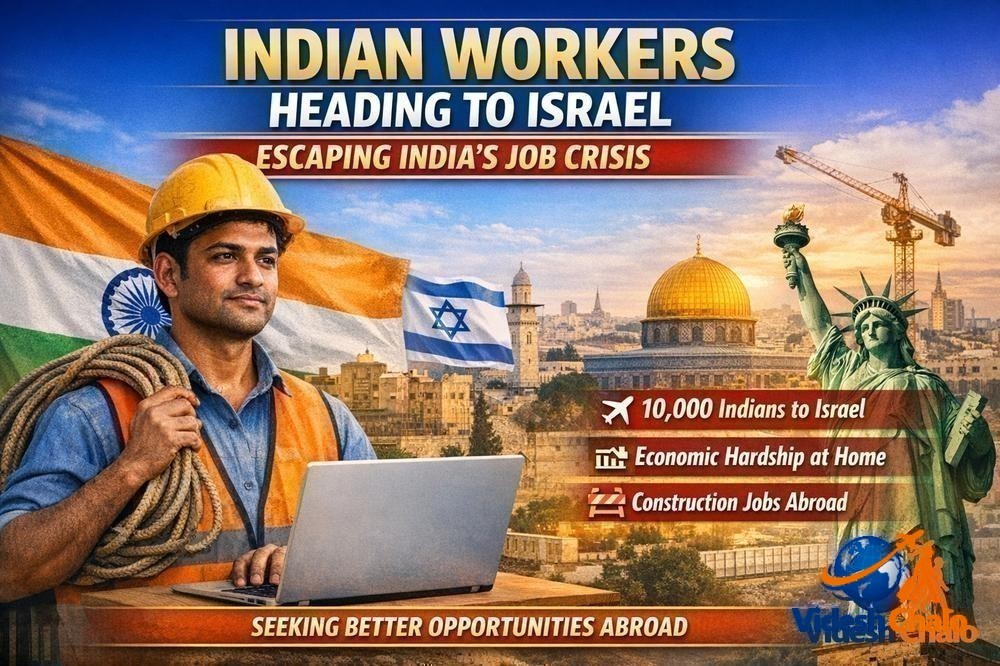
Why 10,000 Indian Workers Are Heading to Israel Amid Job Crisis
📌 Show Quick Read
Summary is AI-generated, Videsh Chalo-reviewed
 Despite India’s fast-growing economy, millions of educated youth struggle to find stable jobs.
-
✈️ Israel plans to hire 10,000 Indian workers amid its post-conflict labor shortage.
-
🏗️ Experts urge India to boost labor-intensive manufacturing and support small enterprises for inclusive job growth.
India’s job crisis pushes thousands to seek work in Israel’s construction sector. Explore the economic challenges and solutions for inclusive growth.
Israel’s Urgent Labour Need
Following the October 7 Hamas-led attacks, Israel barred 80,000 Palestinian workers from entering the country. To fill the gap, Israel now plans to recruit 70,000 foreign workers, including 10,000 from India, to support its booming construction sector.
India’s Economic Growth vs. Job Reality
India is one of the world’s fastest-growing economies, clocking a 7.6% growth rate between July and September 2023. If this momentum continues, India is projected to become the third-largest economy by 2027.
Yet, despite this growth, many Indians—even university graduates— are struggling to find stable employment.
📊 Employment Snapshot
-
25% of the workforce is engaged in casual work
-
Only 23% receive a regular salary
-
The rest are self-employed, often with irregular income
India’s massive working-age population (15–64 years) means the country must create 10–12 million jobs annually to absorb new entrants and shift surplus agricultural labor to non-farm sectors.
Structural Challenges in Job Creation
📉 Demonetisation & COVID Impact
-
In 2016, ₹500 and ₹1000 notes were demonetised, wiping out 86% of India’s currency
-
This led to job losses in construction and manufacturing
-
In 2020, a sudden nationwide lockdown caused GDP to shrink by 5.8%, reversing 15 years of employment progress
🔄 Reversal of Employment Shift
-
Manufacturing jobs declined
-
Around 60 million workers returned to agriculture
-
The structural shift toward non-farm jobs stalled
What India Needs to Do
🏗️ Boost Labour-Intensive Sectors
To harness its demographic dividend, India must:
-
Continue brisk construction activity, led by public sector investment
-
Revive private investment to double construction jobs over five years
-
Support micro, small, and medium enterprises (MSMEs) instead of only large corporations
Large firms often use capital-intensive methods, while MSMEs absorb more labor—historically generating most non-farm jobs in developing nations.
🎓 Invest in Public Services
Public spending should prioritize:
-
Health
-
Education
-
Vocational training
-
Universities
These sectors are labor-intensive and build human capital for both manufacturing and modern services.
📘 Expert Insight: Raghuram Rajan’s View
In his book Breaking the Mould, former RBI Governor Raghuram Rajan suggests India should
-
Focus on exporting services
-
Leverage digital infrastructure
-
Build a New India economy
However, services alone won’t solve the jobs crisis. They cater mostly to highly skilled workers, leaving millions behind.
🔑 Key Takeaways
-
India’s job crisis is pushing workers abroad—even to conflict zones like Israel
-
Economic growth must be labour-intensive and inclusive
-
MSMEs and public services hold the key to sustainable job creation

Beware: Fake Job Offers Leading to Forced Military Service Abroad

Hyderabad Job Fraud: Trivial Chapter Employees Arrested for Fake Europe Work Permits

10 Indians Indicted in US for Massive Visa Fraud and Fake Robbery Scheme

High Demand for Skilled Indian Workers: How AI is Creating New Jobs Overseas

How to Get a Job in Russia: Unlimited Vacancies Announced for Indian Nationals

Iran Allows Indian LPG Tankers Safe Passage Through Strait of Hormuz
Videsh mein naukri chahiye? ✈️
Latest jobs dekhein aur direct apply karein bina kisi agent ke.
Explore Jobs