
 Overseas News
Nvidia CEO: AI Will Create Millions of Jobs, Not Destroy Them
📌 Show Quick Read
Summary is AI-generated, Videsh Chalo-reviewed
-
Nvidia's CEO says AI is an industrial revolution that will create millions of well-paying jobs.
-
AI requires energy, chips, buildings, models, and applications, creating demand for skilled blue-collar workers.
-
AI job impacts, data center costs, and rapid technological advances.
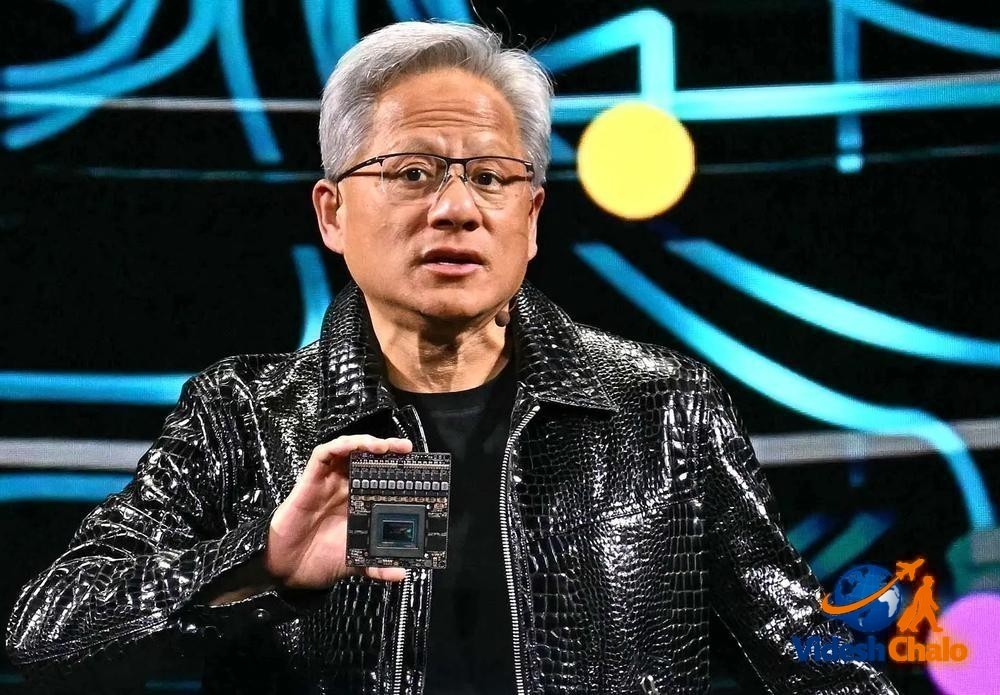
Nvidia CEO Jensen Huang recently wrote an essay arguing that artificial intelligence (AI) is not just a software trend but a major industrial transformation, similar to the invention of electricity. He said AI will create millions of well-paying jobs, not destroy them. Huang emphasized that people do not need advanced degrees in computer science to participate in this shift.
In his blog post, Huang introduced the “five-layer cake” of AI infrastructure. This framework organizes AI development from the ground up:
-
Energy – the foundation for powering AI systems.
-
Chips – the specialized processors AI runs on.
-
Physical infrastructure – the data centers and buildings.
-
Models – the AI algorithms themselves.
-
Applications – the software and services AI enables.
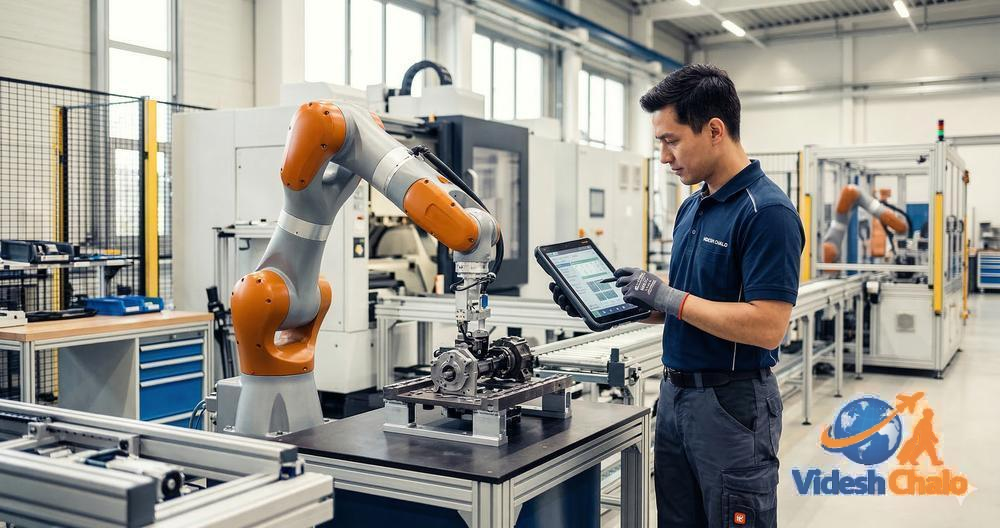
Huang explained that AI is much more than chatbots or software programs. Building AI requires trillions of dollars in physical construction, which will increase demand for skilled blue-collar workers such as electricians, plumbers, pipefitters, steelworkers, and network technicians. These roles are well-paid and in short supply, and they do not require PhDs.
The essay comes amid growing concerns that AI could reduce jobs. Recent layoffs at companies like Block and warnings from AI leaders like Anthropic’s CEO have fueled these worries, putting pressure on tech stocks. Huang argues that these fears miss the bigger picture: AI generates new outputs in real time, unlike traditional software that just retrieves stored instructions.
Because AI generates intelligence on the spot, it requires new infrastructure. Standard data centers cannot support AI at scale; purpose-built systems are necessary. Huang emphasizes that energy is the most critical layer, since AI needs massive, real-time power to operate. Any disruption in energy supply—such as geopolitical conflicts in the Middle East—could slow AI development.
Huang also addressed job displacement concerns using radiology as an example. AI can assist radiologists in reading scans, but this increases overall demand for radiologists, rather than reducing jobs. Greater productivity allows more work to be done, creating new opportunities.
He noted that the AI buildout is still in its early stages, with hundreds of billions already invested and trillions more still to be built worldwide. AI factories are under construction at a scale never seen before.
Political commentary also surrounds AI job debates. Wynton Hall, author of Code Red, explains that some politicians, particularly Democrats, may use AI-driven job losses to influence voters in upcoming midterm elections. Hall outlines four factors shaping this strategy:
-
Money Battle – Pro-AI Super PACs are spending hundreds of millions to support candidates who favor AI innovation with light-touch regulations, while opponents promote stricter oversight.
-
AI-Washing – Some companies may blame layoffs on AI rather than management decisions, shaping voter perception.
-
Data Center Costs – Communities are concerned about rising electricity and water bills from AI data centers. Policymakers are working to ensure these costs don’t fall on ordinary Americans.
-
Technological Acceleration – Advances in agentic AI (AI that can do real tasks) and recursive self-improvement (AI that can improve itself) could rapidly change the job market and require updated regulations.
Huang’s essay and Hall’s commentary highlight that AI is a transformative force, offering new jobs and opportunities while also creating political and economic challenges. Conservative and liberal groups alike are evaluating how AI should be integrated into society, from boosting innovation to protecting workers.
Experts note that AI’s rapid development may outpace existing safety, governance, and regulatory frameworks. Without careful planning, technological advancements could create unforeseen risks—but with the right strategies, AI has the potential to revolutionize industries and expand the workforce.
🚀 AI is Creating Jobs, Not Destroying Them!
Nvidia CEO Jensen Huang says AI isn’t just about chatbots—it’s a full-blown industrial revolution, like the invention of electricity. 🌟
Here’s the scoop:
⚡ AI needs energy, chips, buildings, models, and applications—think massive new factories and data centers.
👷♂️ This boom is creating millions of skilled, high-paying jobs for electricians, plumbers, steelworkers, and network techs.
💡 AI generates intelligence in real time, opening opportunities instead of replacing workers.
Even with political debates about AI job losses and rising data center costs, Huang emphasizes that AI’s growth will expand the workforce, not shrink it.
💬 The message? You don’t need a PhD to join the AI revolution—real work, real jobs, real opportunities.
#AIJobs #Nvidia #FutureOfWork #TechRevolution #SkilledJobs #IndustrialAI #JensenHuang

Beware: Fake Job Offers Leading to Forced Military Service Abroad

Hyderabad Job Fraud: Trivial Chapter Employees Arrested for Fake Europe Work Permits

10 Indians Indicted in US for Massive Visa Fraud and Fake Robbery Scheme
High Demand for Skilled Indian Workers: How AI is Creating New Jobs Overseas

How to Get a Job in Russia: Unlimited Vacancies Announced for Indian Nationals

Iran Allows Indian LPG Tankers Safe Passage Through Strait of Hormuz
Videsh mein naukri chahiye? ✈️
Latest jobs dekhein aur direct apply karein bina kisi agent ke.
Explore Jobs